Gothic Tale- a style in literature characterized by gloomy settings, violent or grotesque action, and a mood of decay
Hyperbole- an exaggerated statement often used as a figure of speech or to prove a point
Imagery- figures of speech or vivid descriptions conveying images through any of the senses
Implication- a meaning or understanding that's to be arrive at by the reader but that is not fully and explicitly stated by the author
Incongruity- The deliberate joining of opposite or of elements that aren't appropriate to each other
Inference- a judgement or conclusion based on evidence presented; the forming of an opinion which possesses some degree of probability according to facts already available
Irony- a contrast between what's said and what's meant or what's expected to happen and what actually happens or what's thought to be happening and what's actually happening
Interior Monologue- a form of writing that represents inner thoughts of a character, recording of internal, emotional experiences of an individual
Inversion- words out of order for emphasis
Juxtaposition- the intentional placement of a word, phrase or sentences of paragraph to contrast with another
Lyric- a poem having musical form and quality; short outburst of the author's innermost thoughts and feelings
Magical Realism- a genre developed in Latin American which juxtaposes the everyday with the magical
Metaphor- an analogy that compares two different things imaginatively
Extended- a metaphor that's extended or developed as far as the writer wants to take it
Controlling- a metaphor that runs throughout the piece of work
Mixed- a metaphor that ineffectively blends two or more analogies
Metonymy- literally name changing a device of figurative language in which the name of an attribute is substituted for the usual name of a thing
Mode of Discourse- argument, narration, description, and exposition
Modernism- literary movement characterized by stylistic experimentation, rejection of tradition, interest in symbolism and psychology
Monologue- an extended speech by a character in a play, short story, novel or narrative poem
Mood- the predominating atmosphere evoke by a literary piece
Motif- a recurring feature in a piece of literature
Myth- a story, often about immortals, and sometimes connected with religious rituals, that attempts to give meaning to the mysteries of the world
Narrative- a story or description of events
Narrator- one who narrates or tells a story
Naturalism- an extreme form of realism
Novelette/Novella- short story; short prose narrative, often satirical
Tuesday, February 5, 2013

Monday, February 4, 2013
Lit Anal #1
Catch-22
by Joseph Heller
1. There is a soldier named Yossarian. He is stationed on the island of Pianosa with his air force squadron. World War II is into its second half and Yossarian is trying to get out of the war by one way or another. Every time Yossarian attempts to get himself out of the war something always stops him, there is always a catch.Yossarian learns hat if he is insane he will be discharged so he fakes that he went insane and goes to the hospital to tell them that he is insane. However, when he does this, they tell him that by saying that he is insane he proves himself sane because any sane person would fake insanity to get out of the war. Yossarian's friend, Nately, falls in love and when the girl finally loves him back he is killed the next mission. That girl then blames Yossarian for Nately's death and tries to kill him every time they cross paths. Troubled by Nately's death, Yossarian decides to wall the streets of Rome. While walking, he sees every type of inhumanity there is, from rape to disease to murder. Ironically, Yossarian is arrested for not having a pass. His supervisors then offer him a choice, be court-martialed or be sent home on honorable discharge. The choice is a clear one for Yossarian, however, his supervisors throw him a curve ball. If he wants to be sent home he has to approve of their policy, which says that all men in the squad must fly eight missions. Yossarian wouldn't let innocent people die for his own gain so he decides to run away to Sweden where he live away from the war.
2. The main theme of the novel is the absolute power of bureaucracy.
3. The tone of the author is satirical and humorous at some points while cynical and grotesque at others.
"'Haven’t you got anything humorous that stays away from waters and valleys and God? I’d like to keep away from the subject of religion altogether if we can.'
The chaplain was apologetic. 'I’m sorry, sir, but I’m afraid all the prayers I know are rather somber in tone and make at least some passing reference to God.'
'Then let’s get some new ones.'"
"Yossarian was cold, too, and shivering uncontrollably. He felt goose pimples clacking all over him as he gazed down despondently at the grim secret Snowden had spilled all over the messy floor. It was easy to read the message in his entrails. Man was matter, that was Snowden’s secret. Drop him out a window and he’ll fall. Set fire to him and he’ll burn. Bury him and he’ll rot, like other kinds of garbage. That was Snowden’s secret. Ripeness was all."
4. Five literary terms that helped me understand the novel better are:
Tone- knowing that the authors tone is satirical, helped me understand why he was writing the story the way it was.
Symbolism- the author used a lot of symbolism to help explain the theme more in depth.
Metaphor- metaphors help make the novel more entertaining to read.
Imagery- it made the novel easier to picture in my mind.
Diction- the words the author chose help create the tone and the imagery of the novel.
by Joseph Heller
1. There is a soldier named Yossarian. He is stationed on the island of Pianosa with his air force squadron. World War II is into its second half and Yossarian is trying to get out of the war by one way or another. Every time Yossarian attempts to get himself out of the war something always stops him, there is always a catch.Yossarian learns hat if he is insane he will be discharged so he fakes that he went insane and goes to the hospital to tell them that he is insane. However, when he does this, they tell him that by saying that he is insane he proves himself sane because any sane person would fake insanity to get out of the war. Yossarian's friend, Nately, falls in love and when the girl finally loves him back he is killed the next mission. That girl then blames Yossarian for Nately's death and tries to kill him every time they cross paths. Troubled by Nately's death, Yossarian decides to wall the streets of Rome. While walking, he sees every type of inhumanity there is, from rape to disease to murder. Ironically, Yossarian is arrested for not having a pass. His supervisors then offer him a choice, be court-martialed or be sent home on honorable discharge. The choice is a clear one for Yossarian, however, his supervisors throw him a curve ball. If he wants to be sent home he has to approve of their policy, which says that all men in the squad must fly eight missions. Yossarian wouldn't let innocent people die for his own gain so he decides to run away to Sweden where he live away from the war.
2. The main theme of the novel is the absolute power of bureaucracy.
3. The tone of the author is satirical and humorous at some points while cynical and grotesque at others.
"'Haven’t you got anything humorous that stays away from waters and valleys and God? I’d like to keep away from the subject of religion altogether if we can.'
The chaplain was apologetic. 'I’m sorry, sir, but I’m afraid all the prayers I know are rather somber in tone and make at least some passing reference to God.'
'Then let’s get some new ones.'"
"Yossarian was cold, too, and shivering uncontrollably. He felt goose pimples clacking all over him as he gazed down despondently at the grim secret Snowden had spilled all over the messy floor. It was easy to read the message in his entrails. Man was matter, that was Snowden’s secret. Drop him out a window and he’ll fall. Set fire to him and he’ll burn. Bury him and he’ll rot, like other kinds of garbage. That was Snowden’s secret. Ripeness was all."
4. Five literary terms that helped me understand the novel better are:
Tone- knowing that the authors tone is satirical, helped me understand why he was writing the story the way it was.
Symbolism- the author used a lot of symbolism to help explain the theme more in depth.
Metaphor- metaphors help make the novel more entertaining to read.
Imagery- it made the novel easier to picture in my mind.
Diction- the words the author chose help create the tone and the imagery of the novel.
Thursday, January 31, 2013
Tale of Two Cities Lecture notes.
- Manchester is the third of the two cities.
- Preface outlines Dickens' influence on the story.
- Dickens wrote play "The Frozen Deep" in 1857.
- Dickens fell in love with a woman named Ellen.
- Ellen influenced the character Lucie in A Tale of Two Cities.
- By 1857 his marriage was falling apart and got a divorce.
- April, 30, 1859 Dickens publishes chapters 1-3 of A Tale of Two Cities.
- Dickens knew every inch of London.
- Dickens hated but loved London.
- Dickens loved Paris and went there 15 times between the years 1844-1868.
- A Tale of Two Cities was one of two historical novels Dickens wrote, it covered the years leading up to the 1785 French Revolution and the years following.
- The main characters were based off of Dickens and other people in his life.
- Dickens thought that A Tale of Two Cities was the best book ever written.
Saturday, January 26, 2013
Smart Goal
My goal to be accepted into a four year college and major in computer graphics. My number one choice would be UC Irvine. After graduating, I would like to attain a job as a digital effects artist for movies. I would also like to pursue water polo in college and make the travel team.
Wednesday, January 23, 2013
Lit terms 6-30
6. Analogy- a comparasin between two things to show the similarities.

7. Analysis- a method in which a work or idea is separated into its parts, and those parts given rigorous and detailed scrutiny.

8. Anaphora- a device or repetition in which a word or words are repeated at the beginning of two ore more lines, phrases, clauses, or sentences.

9. Anecdote- a very short story used to illustrate a point.

10. Antagonist- a person or force opposing the protagonist in a drama or narrative.

11. Antithesis- a balancing of one term against another for emphasis or stylistic effectiveness.

12. Aphorism- a terse, pointed statement expressing some wise or clever observation about life.

13. Apologia- a defense or justification for some doctrine, piece of writing , cause , or action; also apology.

14. Apostrophe- a figure of speech in which an absent or dead person, an abstract quality, or something inanimate or nonhuman is addressed directly.
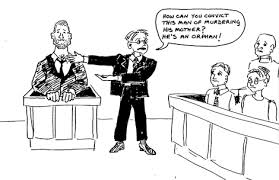
15. Argument- the process of convincing a reader by proving either the truth or the falsity of an idea or proposition; also, the thesis or proposition itself.

16. Assumption- the act of supposing, or taking for granted that a thing is true.
I assume that this is fake.

17. Audience- the intended listener or listeners

18. Characterization- the means by which writer reveals a character's personality.
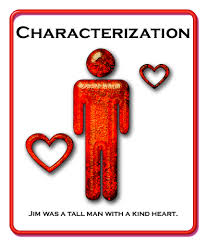
19. Chiasmus- a reversal in the order off words so that the second half of a statement balances the first half in inverted word order.

20. circumlocution- a roundabout or evasive speech or writing, In which many words are used but a few would have served.

21. Classicism- art, literature, and music reflecting the principles of ancient Greece and Rome: tradition, reason, clarity, order, and balance

22. Cliché- a phrase or situation overused within society..

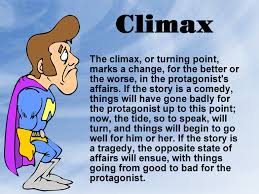
23. Climax- the decisive point in the narrative or drama; the pint of greatest intensity or interest at which plot question is answered or resolved.
24. Colloquialism- folksy speech, slang words or phrases usually used in informal conversation.
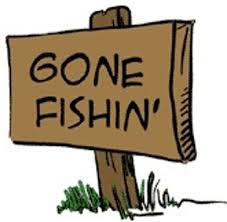
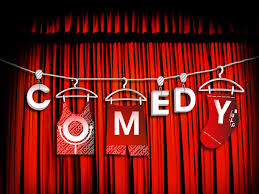
25. Comedy- originally a nondramatic literary piece of work that was marked by a happy ending; now a term to describe a ludicrous, farcical, or amusing event designed provide enjoyment or produce smiles and laughter.
26. Conflict- struggle or problem in a story causing tension

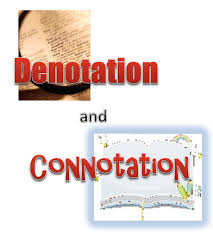
27.Connotation- implicit meaning, going beyond dictionary definition
28.Contrast- a rhetorical device by which one element (idea or object) is thrown into opposition to another for the sake of emphasis or clarity.

29.Denotation- plain dictionary definition
See 27. ^
30.Denouement- loose ends tied up in a story after the climax, closure, conclusion.
7. Analysis- a method in which a work or idea is separated into its parts, and those parts given rigorous and detailed scrutiny.
8. Anaphora- a device or repetition in which a word or words are repeated at the beginning of two ore more lines, phrases, clauses, or sentences.
9. Anecdote- a very short story used to illustrate a point.
10. Antagonist- a person or force opposing the protagonist in a drama or narrative.
11. Antithesis- a balancing of one term against another for emphasis or stylistic effectiveness.
12. Aphorism- a terse, pointed statement expressing some wise or clever observation about life.
13. Apologia- a defense or justification for some doctrine, piece of writing , cause , or action; also apology.
14. Apostrophe- a figure of speech in which an absent or dead person, an abstract quality, or something inanimate or nonhuman is addressed directly.
15. Argument- the process of convincing a reader by proving either the truth or the falsity of an idea or proposition; also, the thesis or proposition itself.
16. Assumption- the act of supposing, or taking for granted that a thing is true.
I assume that this is fake.
17. Audience- the intended listener or listeners
18. Characterization- the means by which writer reveals a character's personality.
19. Chiasmus- a reversal in the order off words so that the second half of a statement balances the first half in inverted word order.
20. circumlocution- a roundabout or evasive speech or writing, In which many words are used but a few would have served.
21. Classicism- art, literature, and music reflecting the principles of ancient Greece and Rome: tradition, reason, clarity, order, and balance
22. Cliché- a phrase or situation overused within society..

23. Climax- the decisive point in the narrative or drama; the pint of greatest intensity or interest at which plot question is answered or resolved.
24. Colloquialism- folksy speech, slang words or phrases usually used in informal conversation.
25. Comedy- originally a nondramatic literary piece of work that was marked by a happy ending; now a term to describe a ludicrous, farcical, or amusing event designed provide enjoyment or produce smiles and laughter.
26. Conflict- struggle or problem in a story causing tension
27.Connotation- implicit meaning, going beyond dictionary definition
28.Contrast- a rhetorical device by which one element (idea or object) is thrown into opposition to another for the sake of emphasis or clarity.
29.Denotation- plain dictionary definition
See 27. ^
30.Denouement- loose ends tied up in a story after the climax, closure, conclusion.
Tuesday, January 15, 2013
Lit Terms 1-5
1. Allegory-
In my opinion, this is an allegory of Christmas. It is showing a "tail" tale of how North America wants more and more and is pushing out of their boundaries which is consuming them in darkness. South America area is content with what they have which is why they are golden.

2. Alliteration-
An angry alligator ate an apple at an airport.
3. Allusion-

4. Ambiguity-
Nobody knows why Mona Lisa is smiling and people have different interpretations of her facial expression.

5. Anachronism-

In my opinion, this is an allegory of Christmas. It is showing a "tail" tale of how North America wants more and more and is pushing out of their boundaries which is consuming them in darkness. South America area is content with what they have which is why they are golden.
2. Alliteration-
An angry alligator ate an apple at an airport.
3. Allusion-
4. Ambiguity-
Nobody knows why Mona Lisa is smiling and people have different interpretations of her facial expression.
5. Anachronism-
Friday, January 11, 2013
AP prep post "Siddhartha"
1. If you were the river, would you be enlightenment or would you know enlightenment? In other words, what’s up with the river? What is it’s relation to enlightenment?
2. What does enlightenment look like in Siddhartha? Is it a feeling? An attitude?
3. What purpose does self-denial serve in Siddhartha? What about self-indulgence?http://www.shmoop.com/siddhartha/questions.html
4. Siddhartha features substantial activity and narrative action. At the same time, it is about one man’s largely internal spiritual quest. What is the relationship between the internal and exterior worlds of Siddhartha? How does Siddhartha negotiate these worlds?
5. Herman Hesse’s novels before Siddhartha focused on alienated young men who rejected the cultures of their upbringings. However, these other novels did not feature the spiritual elements of Siddhartha. How do the spiritual elements of Siddhartha make it different from any other story of an alienated youth?
http://danig14.blogspot.com/2013/01/1.html#!/2013/01/1.html
To answer these questions, I would have to completely reread the book. I remember very little of it, but I feel like if I did reread Siddhartha, these questions wouldn't be too hard. I would just have to read it carefully and make sure that I understand it all.
2. What does enlightenment look like in Siddhartha? Is it a feeling? An attitude?
3. What purpose does self-denial serve in Siddhartha? What about self-indulgence?http://www.shmoop.com/siddhartha/questions.html
4. Siddhartha features substantial activity and narrative action. At the same time, it is about one man’s largely internal spiritual quest. What is the relationship between the internal and exterior worlds of Siddhartha? How does Siddhartha negotiate these worlds?
5. Herman Hesse’s novels before Siddhartha focused on alienated young men who rejected the cultures of their upbringings. However, these other novels did not feature the spiritual elements of Siddhartha. How do the spiritual elements of Siddhartha make it different from any other story of an alienated youth?
http://danig14.blogspot.com/2013/01/1.html#!/2013/01/1.html
To answer these questions, I would have to completely reread the book. I remember very little of it, but I feel like if I did reread Siddhartha, these questions wouldn't be too hard. I would just have to read it carefully and make sure that I understand it all.
Subscribe to:
Posts (Atom)